Showing posts with label plant. Show all posts

Kingdom Plantae (Plants): Definition, Characteristics, Classification

THE DEFENSE OF KINGDOM PLANTAE

Kingdom Plantae or the Plant Kingdom is one of the multicellular eukaryotic organisms that have cell walls and chlorophyll. Chlorophyll is a green leafy substance that plays a role in the process of photosynthesis so that plants are able to make their own food. The process of photosynthesis can occur with the help of Sunlight. Because plants are able to make their own food, plants are grouped into autotrophic organisms.

Characteristics - KINGDOM PLANTAE


1. Has a Chlorophyll that plays a role in the process of photosynthesis
2. An autotroph (Able to make his own food)
3. It has cell walls composed of cellulose
4. Multicellular Eukaryotic Organisms
5. Store food reserves in the form of starch (starch)
6. Have a hereditary turn in the life cycle.

kingdom plantae
Kingdom Plantae (Plants): Definition, Characteristics, Classification

CLASSIFICATION OF KINGDOM PLANTAE

The classification of plants is necessary because in this classification we can distinguish plant species from one another. The classification of kingdom Plantae will be discussed below.

Bryophyta Division (Moss Plant)

1. Moss can be found in moist places such as walls, soil, weathered rocks, and bark.
2. Moss likes a humid place because the moss needs water to fertilize. The absence of water causes male sex cells to be unable to fertilize female genital cells.
3. Moss has no phloem and Xylem that serves as a transport vessel. Because moss likes a humid place because there is enough water content.
4. Moss has a root called rhizoid. Rhizoid serves to absorb water and minerals as well as attachment tools.
5. Moss plants are divided into 3 namely Hepaticopsida Class (Lichen Hati), Class Anthocerotopsida (Horn Mosquito) and Class Bryopsida (Leaf Moss).

Pteridophyta Division (Nail Plants / Ferns)

1. Nail plants already have true roots, stems, and leaves. The arrangement of plant leaves spikes like fleece nails.
2. Has a vessel Xylem and phloem.
3. It can live anywhere, especially humid areas such as water, rock surfaces, soil, tropical rainforest and tree bark.
4. It has varied shapes such as sheets, shrubs or deer horns
5. Consisting of 4 classes namely Class Psilopsida (Ancient Nail), Class Lycopsida (Wire Nail), Sphenopsids (Horsetail) and Pteriopsida (True Nail).

Division of Spermatophyta (Seed Plants)

1. High Plants of Kingdom Plantae
2. It has true roots, stems, and leaves and has varying heights and shapes.
3. Produce the seeds as a breeding tool. Reproduction through pollination and fertilization
4. It has a terrestrial habitat and partially in lotus water samples.
5. The spermatophyte division is subdivided into two subdivisions, namely the Gymnospermae subdivision (Open seed plant) and the angiosperms subdivision (covered seed plant).

a. Gymnospermae subdivision (Open seed plant)

a.1. Does not have a seed wrapper. The seeds are open and present on the surface of the fruit leaf
a.2. Consists of woody plants and rooted riding and has a variety of shapes
a.3. Having female and male genitals on one tree but with a separate location.
a.4. Some have different male and female genitals of trees.
a.5. Divided into 4 classes namely Class Cycadinae, class Ginkgoinae, class Coniferae and class Gnetinae.

b. Subdivision of Angiospermae (Closed Seed Plant)

b.1. Seeds are covered by fruit. Plants can be large trees, shrubs, vines and non-woody plants.
b.2. Generally, have flat and wide leaves with varying shapes.
b.3. The reproduction system is a flower that consists of perfect flower and imperfect.
b.4. The perfect flower has male and female genitals while the flower is not perfect only has one or both.
b.5. Reproduction takes place by pollination and fertilization.
b.6. Angiospermae is divided into 2 classes namely Monocotyledons Class (One Piece Beans) and Class Dycotyledone (Shat Two).

b.6.1, Monocotyledons Class (One Piece)

1. Consisting of fibrous roots that are generally not as solid as a taproot root.
2. It has a wide and unbranched stem
3. It has no cambium so it cannot grow bigger
4. Generally, leaves have bones that are parallel or curved
5. The interest has a three-part number
6. Monocots are divided into five orders, namely the Order of Gramineae (Grasses), the Palmae order (palm-pale man), the Order of Zingiberaceae (ginger-ahead), the Order of Bromeliaceae (Pineapple) and Orchidaceae (Orchid).

b.6.2. Dycotyledone Class (Tipped Two)

1. Has solid riding roots.
2. It has cambium so it can grow big.
3. It has a branch that has branches, books, and segments that are not clear
4. Has single or compound leaf and leaf bone or pinnate
5. The interest of dicotyl amounted to a multiple of 2, 4 or 5.
6. Dicotyl plants consist of several orders such as Order of Euphorbiaceae (Gum-sap), Leguminoceae (pod), Solanaceae (Eggplant), Rutaceae (Orange), Malvaceae (Cotton), Myrtaceae (guava) and Compositae.

How to Plant a Simple Hydroponics For Beginners

How to Plant a Simple Hydroponics For Beginners
How to plant simple hydroponics can take advantage of used goods that are not used in the environment around us. Its name is also simple, definitely related to the ways - a way that is easy and does not cost much in the process. You can also learn how to grow hydroponic tomatoes to enrich your horizons on hydroponic issues.

Plant a Simple Hydroponics

How to Plant a Simple Hydroponics

Many say that how to plant simple hydroponics is very friendly to the surrounding environment and actually even help in terms of environmental conservation itself. How not to, by utilizing used goods like beverage bottles that many scattered, means reducing the risk of contamination.

In this article will discuss "how to plant simple hydroponics" that will be reviewed more deeply so that you can make as reference materials, let us refer together - the following explanation below:

1. Prepare Materials And Equipment Needed
Before starting planting activities, of course, you will need the materials and equipment needed to support the process of the road you are waiting for - plantation. This stage is very decisive once the plants you plant can grow well or not.

Cut the ingredients into 2 equal parts. Then place the piece of the funnel upside down into the other piece. This is done to simplify the process of absorption of water requirements that have been provided at the bottom of the bottle that you have designed in such a way. You can also learn about a wide range of hydroponics systems.

2. Prepare Media Planting In accordance with Needs
For the application of hydroponic planting, it usually does not use soil media but tends to other more flexible media. For example, such as charcoal husk, rocks, and others depending on the needs of the planting itself. So, in my opinion, choose which one is easy it can without having to expense.

3. Prepare Seeds to be Grown
The next way to plant hydroponics is the selection of seeds. Seed selection here is equally important before starting the planting process with hydroponics techniques. Selection of good quality seeds will greatly affect the results you get in the future.

Try to find the seeds that really excel and must have good resistance to pests or diseases and can quickly adapt to environmental changes that occur. In the end, concerns about crops that may be dead can be handled well.

For the type of vegetable or fruit that you will plant, can be combined with various types so that later you can enjoy the results and different sensations - different. In addition, it is expected to help open and increase your insight into the various types of plants that have been planted. Can be in terms of characteristics of various plants or in terms of the good harvesting process. You can learn about how to grow hydroponics for beginners.

4. Seeding Process
Next, you will enter the seeding process. Make sure again whether the need to start sowing is ready all. If it is really ready, then you can start to do the seeding. You can do the seeding by putting the seeds to adjust to the plants to be planted.

For example, mustard, spinach, spring onion, lettuce, you can put more than one seed at the planting place. While plants such as tomatoes, chili, eggplant, it is better to put only 1 seed at each place of planting. This is done to maximize growth by considering the size of the plants that will grow later.

Furthermore, you have a duty that you should pay attention to well that is, keep the moisture condition of the planting media in the hope that the seeds will grow soon in accordance with the normal time. You can learn more about modern farming.

5. Planting Process
This planting process is needed if the sowing plants begin to grow large and the place is not qualified to accommodate it, then the move to another greater place of law becomes mandatory. If you do not move it as quickly as possible, bad things may happen. For example, the plant is not able to grow well and where the planting will be damaged because it is not ideal.

Next, you should pay attention to planting distance. Because the determination of distance can also affect the level of flexibility or space and how the plant can grow well. Limited places can still apply the right distance determination.

Most importantly do not force the number of plants that you plant, but pay attention to the results that you will definitely get later. Do not until you are ambitious to plant in large quantities and do not pay attention to the distance, the edges - ends even most of the plants cannot be harvested. So my advice is to consider long-term decisions. You can learn other things like how to improve farm produce to get good and satisfactory results.

6. Consider the Place of Planting
The location of the plant should also be considered because it will affect the process of plant growth. Moreover if your home area of land there is a cover, surely light that can enter very limited. For that, I recommend using a roof canopy with materials that can be penetrated by sunlight. You can also put your plants outside the fence of the house by utilizing the top of the water channel that has been closed.

7. Pay attention to Water Requirement
Although at the bottom of the planting place (bottle bottom) there is a deliberately designed section for water reservoirs, you still need to pay attention to the time it takes to add water to keep the moisture awake. The advantage of using this technique so you do not need to do watering every day because there is a water reservoir.

8. Prepare for Nutrition Needed
Nutritional needs are needed for plants to support growth to keep the condition fresh and good. You can use a fertilizer that can be used to meet the daily nutritional needs of the plant. Consider the required level of fertilizer requirement, for example, the good of fertilizer every few days so that the plant does not experience a slowdown in the growth process.

In addition, you are also not advised to use excessive fertilizer. Just follow the manufacturer's recommended usage. But if you use a homemade fertilizer, then you can give fertilizer every once a week. Once you have followed the process well, chances are you have a chance to get good results too.

9. Treatment Process
Care is necessary to maximize the results that will be obtained later. As well as making efforts to prevent the plant is not susceptible to disease, attention to the needs of water, nutrition and also light well. My advice to avoid the use of harmful substances such as pesticides as a solution to create plants that have good endurance.

The solution can actually create other problems as well as environmental pollution around your house, so it will greatly affect the level of public health itself. In addition, the use of pesticides requires a decent cost.

All you have to do is pay attention to your plants every day. If there are conditions that are not good you can do the handling - ways that are friendly to the environment. For example, when there are signs of the leaves begin to look wilted, hollow or dry, then you can immediately cut it to avoid transmission to other parts.

Can be concluded that the article on how to plant simple hydroponics that has been reviewed above in detail and well packaged is expected to help facilitate you in learning and understanding it more deeply so worthy of being used as a reference source.

Until here first yes this article that discusses how to plant simple hydroponics. Hope it can be useful for my friend and thank you for taking a little time to read my article.

Understanding Physiological Adaptation, Examples of Physiological Adaptation In Humans, Animals, and Plants

Understanding Physiological Adaptation, Examples of Physiological Adaptation In Humans, Animals, and Plants - In this discussion, we will explain about Physiological Adaptation. Which includes the notion of physiological adaptation, and examples of physiological adaptations that exist in humans, animals, and plants with the complete and easy-to-understand discussion. For more details please refer to the reviews below carefully.

Understanding Physiological Adaptation

Before discussing the adaptation of physiology, it would be nice to know what is meant by adaptation. Adaptation is a system of how the organism in overcoming the environmental stresses around it to survive.

Which organisms that can adapt well will be able to survive and who cannot adapt well will accept the consequences of not becoming extinct or becoming rare kind.

One type of adaptation is a physiological adaptation. In the sense of physiological adaptation is the way living creatures to adjusting themselves to the environment through work function in the organs of the body that aims in order to survive. This type of physiological adaptation is rather difficult if observed because it occurs only on the inside of the organs of living things.

Precisely, the adaptation of physiology is an adaptation that includes the functioning of the body. This adaptation can be in the form of an enzyme obtained from an organism. But physiological adaptation may be reversible or may return to its original state. Examples of Physiological Adaptation

In adaptable living beings there are several examples that can be seen in the explanation below, namely:

example physiological adaptation in animals

Examples of Human Physiology Adaptation


The example of physiological adaptation in humans is as follows:

The number of red blood cells that live on the coast are fewer than those living in mountainous areas. This is because of the partial pressure of oxygen in the coastal area more than the mountainous area. When the oxygen partial pressure is low, too much red blood cells are required to bind oxygen.

The average athlete has a larger heart size than the heart size of people in general. When it's hot, we'll sweat. Come out dry, make our body will be cold because body heat is taken to evaporate the drying on the surface of our bodies.

In cold weather, people are more likely to urinate more often.

The human eye can adjust to the intensity of light it receives. When in a dark place, the pupils will open wide. Conversely, if the place is bright, pupils will narrow eyes. The narrowing or narrowing of the pupils is an attempt to regulate the intensity of light.

Examples of Behavioral Adaptations in Plants

In plants, there are several examples of physiological adaptations that can be seen, including:

1. Banana trees have leaves that are wide and thin and coated with wax to be able to adapt to the environment.
2. Ferns adapt to the humid environment by rolling the young leaves.
3. In order to survive in tidal waters, the mangrove tree has a hanging root which works for breathing
4. There are several types of plants that can produce a kind of acidic substances to prey on insects or animals.
5. Water hyacinth and water spinach have hollow stem making can live and grow in water.
6. Dikotil plants have beautiful flower crowns and have a function to attract insects to help pollinate
7. Flowering plants will often produce nectar to attract insects to help pollinate
8. A hazel shrub in the country of Japan, acacia trees can release substances that are toxic to herbivorous animals.

Examples of Physiological Adaptation in Animals

While in animals, there are several examples of physiological adaptations, among others are:

1. When in a place or area of cold air, cold-blooded animals the speed of metabolism will decrease.
2. While animals that warm-blooded metabolism speed will rise when in a place or area with hot temperature.
3. Camel keeps the water reserve of the hump sac so the camel can survive in dry areas or deserts.
4. Owls have sharp eyesight at night, making it easy to find prey.
5. Fish that live in the ocean will release a more concentrated urine than with fish that live in fresh water.
6. Animal species of a weasel can emit the odor from their bodies, this function as a protector of the enemy's threat.
7. Squirrel-like animals exist that can extract the water that comes from the grain so that the animal can survive in dry areas.
8. The chameleon possesses Mimicry's ability, enabling it to change its skin color according to its environment or residence and avoid predators or from its enemies.

This has been explained about the Understanding of Physiological Adaptation, Examples of Physiological Adaptation in Humans, Animals, Completed Plants may be able to increase your insight and knowledge.

Benefits of Lichen Plant for Human Life

Benefits of Lichen Plant for Human Life
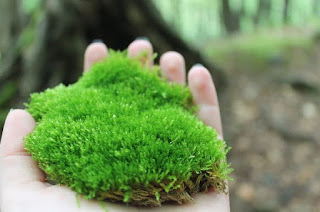
When viewed at a glance, for most people lichen plants are regarded as plants that are not useful and often referred to as pests plants. But actually there are a lichen plant benefits, there is a substantial market that collects the lichen from the wild to be used as raw materials of a product, there is also a make lichen as a material for environmentally friendly building decoration and some even use lichen to be a delicious food such as "lichen soil" which is processed into cooking up.

Some lichen plants are also used for fuel, for example, lichen type "Sphagnum". In the mining area, these lichen plants (in dry conditions) are used as fuel for lighting equipment, so this lichen is very helpful in the work of miners. In addition, Sphagnum type cristatum and subnitens in dry conditions can also be used for a growth medium on horticultural crops, such as vegetables and fruits. In the medical world, lichen also has many benefits.

There are several types of lichen plants that can be used for health, for example, "Marchantia" lichen species that can be used as a cure for liver disease, most plants that live on the rocks also over time will cause weathering on rocks so that the stone is destroyed and become the ground.

The process of weathering rocks assisted by lichen plants caused by Rhizoid lichen that penetrates the surface of the rock, so the rock becomes brittle and crumbled and then form the soil and become a place to grow other plants, well this is the answer why the lichen is called a pioneer vegetation.Overall, living lichen plants in forest areas or above ground can prevent erosion, reduce flood risk, and can also be useful for soil water absorption so as to provide water during the dry season. Likewise with dead lichen plants can be used to add organic substances in the soil so that the soil becomes more fertile and other plants and grow on it.

benefit of lichen


Based on existing data, the lichen can be used as an ingredient for household ornaments, medicines, materials for science and as a biological indicator for environmental degradation. Some examples of such usable lichen are Calymperes, Campylopus, and Sphagnum (Glime & Saxena, 1991 in Tan, 2003). In addition to being an environmental indicator, the presence of lichens in tropical rainforest plays an important role in growing organisms such as insects and rainwater reservoirs (Gradstein, 2003).

Sphagnum is sometimes used as an alternative medium for hatching crocodile eggs by crocodile farmers in the Philippines. Even the reported use of dried lichen as fuel and materials for the construction of houses in hot areas but this cannot be applied in Southeast Asia (Pant & Tewari, 1989 in Tan, 2003).

Lichen plant is often also used for landscaping and greenhouses. Another thing that has been done with this lichen is to use it as a medicinal ingredient. Based on the results of research in China, more than 40 types of lichen have been used by the Chinese community as ingredients of medicines mainly to treat the itching and other diseases caused by bacteria and fungi (Ding, 1982 in Tan 2003).

Sphagnum lichen is also a major component of fuel, which is mined for fuel use, as a plantation crop, and barley sprouts dried on Scotch Whiskey production. Sphagnum, usually a type of cristatum and subnitens, is harvested while it is growing and dried in use in a child's room children and horticulture as a growth medium.

Lichen plant lives on the rocks over time will cause the stone destroyed into the ground because rhizoid can penetrate the surface of the rock. Next, it will gradually form new soil as a place to grow other crops, because this is the lichen referred to as pioneer vegetation.

Lichen living in forests or above ground can prevent erosion, reduce flood hazards, and be able to absorb water to provide water during the dry season. Dead lichen can be utilized to bend organic substances in the soil so that the soil will become fertile and suitable for other plants.

Marchantia polymorpha to treat hepatitis, Sphagnum as a pad or substitute of a pass, if Spagnum added to the soil can absorb water and keep soil moisture. Lichen plants that have been known to benefit as drugs divided into two groups namely lichen liver and leaf lichen. Some of the lichen plants include:

1. Marchantia polymorpha is also known as lichen liver, it can be used as a hepatitis drug, eliminating toxins due to snake bites.
2. Conocephalum conicum, also including liverwort, serves as antibacterial, antifungal, treats burns and external wounds.
3. Frullania tamarisci is a liver of liver that can be used as an antiseptic drug.
4. Fissidens japonicum, a leaf lichen, can be used to help hair growth.
5. Rhodobryum giganteum, a type of leaf lichen that can treat high blood pressure and as a sedative or anesthetic.
6. Ciconeuron filicinum, including leaf lichen containing compounds to treat heart disease.
7. Haplocladium catillatum, a leaf lichen, is useful for treating pneumonia.

The role of lichen plant is as a producer in the ecosystem.

1. Sphagnum has the ability to turn waters into the land.
2. Sphagnum many also used as a substitute for cotton.
3. The dried Sphagnum waste is called peat, it can be used as fuel, as a mixture for loosening clay structures, as humus for the less powerful sandy soil that binds water, as the ingredients of paraffin and ammonia.
4. Lichen as a pioneer vegetation.
5. Lichen plants are instrumental in absorbing and retaining rainwater in forest areas.