Showing posts with label social. Show all posts

Social Differentiation: Understanding, Characteristics, Shapes, and Types

UNDERSTANDING SOCIAL DIFFERENTIATION

Differentiation of words derived from English "Difference" means the difference. In accordance with the language, social Differentiation is a classification society into a group – a particular group based on similarities and differences of these community members. This social differentiation within the grouping to its equally and not give rise to levels, levels. This means that a group is not considered better or higher than other groups. The purpose of social Differentiation is showing that the existence of diversity in an environment of society in a region.

The opposite of social differentiation is social stratification. The social stratification of society with a system of categorizing the hierarchy. This means that one group has power or is considered better than other groups.

CHARACTERISTICS of SOCIAL DIFFERENTIATION 

There are several key features that could serve as a benchmark for social finding. This last is typical of the identity makes a group different from other groups. Here are the traits of social finding in question:

1. Physical characteristics
Physical characteristics refer to the identity of someone who can be seen by the sense of sight (eyes). Physical characteristics is derived from birth and will continue to be the hallmark for someone he underwent submarine life. Examples of physical characteristics is the hair color, skin color, eye color, nose shape, posture, races, and more. Well someone's physical characteristics based on grouping in the system of social differentiation does not indicate that one group is better than other groups. For example, white people and black people built have the same position in a community environment.

2. Social Characteristics
Social identity refers to the characteristics of a person based on their function in the life of society. Each person has different roles – different socially, each having duties and responsibilities relating to the profession or job. Grouping people based on their interests or talents in social life does not show that he was better or worse than others. For example, a group of farmers and fishermen, they have the same degree in a social environment. To survive we complement each other, therefore let everyone should mutually respect each other.

3. Cultural Characteristics
Characteristics of culture refers to a group identity based on Customs and habits that have developed from generation to generation within a community environment. Well in accordance with the principle of Social Differentiation, every culture have the same position, there is nothing more excellent or better, they are considered equal.

social differentiation

CLASSIFICATION OF KINDS OF FORMS OF SOCIAL DIFFERENTIATION

There are two types of parameters, which provided a benchmark for social differentiation forms divided into two groups, namely:

1. Based on the parameters Sociocultural

a. Differentiation Tribes (Tribal Finding)
Ethnic groups also often we refer to an ethnic group is a group of human beings whose members identify with each other based on her lineage are considered equal. Ethnic identity is marked by the recognition from others will be the hallmark of the Group owned such as in common cultural, linguistic, religious, behavioral, and biological traits. Internationally agreed that ethnicity is a fundamental factor in human life, it is a symptom that is contained as a human experience. Uniformity of culture can be widened or narrowed due to the occurrence of cultural mixing between ethnic groups from various regions who settled together as a community group.

Differentiation Of The Clan (The Clan Of Finding)
The unity of kindred unilaterally referred to as clans. The clan is the social unit that is based upon a strong blood ties. Social differentiation in the clan is known for the term Patrilineal and Matrilineal. Kinship is patrilineal people based on the lineage of the father, while the Matrilineal kinship is based on maternal lineage. Traits of a clan are:


  • Life partner selection set/set endogamy according to the principle, that the couple must come from within the clan.
  • Bonding of kinship based on the relation of blood or ancestral similarities.
  • The same working group is timeless.
  • The relationship among members is extremely tight.


Differentiation Of Religion (The Religion Of Finding)
1. Religion is a belief and worldview that connects human beings with an order/injunction in life.
2. Religions have symbols and sacred history is intended to explain the origin and meaning of life.
3. Religion has a strong bond with someone because every religion have rules, Holy Scripture, Holy places and that affects the life of the believer.

Differentiation of professions (Profession Finding)
Member of society has a size of knowledge, interests, talent and wealth. This makes the function of someone in the community will be different in accordance with its ability. Therefore it appears a profession or are too often we call work. In the language professions of Greece " promise for fulfilling the liability by doing a task given to him ". A profession usually have a code of ethics, the Association of the profession, as well as the license is specific to the profession.

Differentiation of professions proved that humans as social creatures cannot live on its own. We definitely need someone else in this life. Every profession has its own honor even though their way of working is different, therefore there is no profession that is considered higher than other professions.

Based On Biological Parameters


a. Differentiation of the sexes (Sex Finding)
Gender is a class or a group formed as a result of the use of the process of sexual reproduction to maintaining the continuity of life. Human Sex differentiation of two groups, namely men and women. In living our lives, there are different roles between men and women in society. Usually men role to give living family, while the woman (mother) plays to take care of everything related to the household. But over the life of this functionality has changed, there have been many women who played an important role in giving his loving family, however, essentially based on the concept of social differentiation, classification based on gender is not make someone better than others.

b. differentiation of races (of finding Racial)
Race is a classification system used to classify human beings in a large group based on physical characteristics, geographic origin, look and tribal. The paradigm of race is often used in various disciplines more pressing on the nature of the biological or social invalid constructs a person. The role of the anthropologists and evolutionary scientists identify the term to discuss racial genetic differences (Biological), whereas historians and social scientists have defined the race as a cultural category or social construction, a certain way of people talking about themselves and about others.

c. Differentiation Age (Age of finding)
Age or age is a unit of time to measure the time of our existence as a living thing. During this time many of the assumptions in the community who think that the older a person then the higher position. The understanding is a standing that is incorrect. In the science of social differentiation at this time, we do not perceive about the power of a person, the more we look at the facts the existence of difference in age in various aspects of social life. Well this age difference does not make people younger or older is better or have a higher position in these aspects.
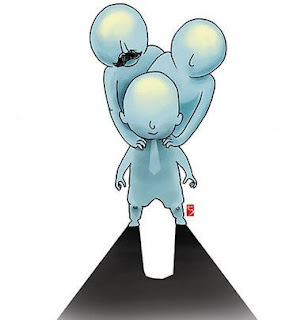

Family in the Application of Character Education

Family in the Application of Character Education
The child is the center of education and learning in the family. The education provided by the parents to the child should be oriented to the needs of the child as a biopsychosocial religious creature and use methods appropriate to the child's development, both his biological physical development, his psychic development, social development and the development of his religiosity.

In its development, children, especially those who have reached adolescence, have certain attitudes, certain knowledge, and certain skills. Teens are not like empty glasses that can easily be loaded with something. Thus a different approach is required in education for adolescents. Education for adolescents should refer to the principle of adult education. Learning Family Experience

One of the effective learning methods for learning in the family is the method of experiential learning. has enormous benefits in adult education aimed at enhancing skills in human relationships, behavioral change, and cooperation within organizations. Learning from this artificial experience is considered effective when learners undergo a process according to a circle called The Experiential Learning Cycle.

The experience-based learning process takes place according to a pattern that begins with an experience, then continues on the contemplation and analysis of the meaning of the experience and about its continuation. In experiential learning, the experience is created in a learning situation. Through this experience will give people a lesson and that learning from the experience or meaning of an experience depends on the processing by the person experiencing itself. Through a learning process facilitated by a professional learning facilitator, the person will find out for himself a lesson that can be drawn from his experience.

Read more: Child Learning

Application of Character Education


Through this model, the individual can learn intact, which involves aspects of cognition, affection, and conation. This model of learning experience needs to be considered a non-traditional learning model. This is because the current reality that learning is associated with the concept of school, in the classroom, lecturers/teachers provide information with lectures only. Learning becomes problematic (instructive, dependent on teachers/lecturers, achieving predetermined curriculum targets) so that individual opportunities to develop in accordance with their respective potentials are less actualized.

Through the model of individual learning experience can develop in accordance with its potential because the model of experiential learning is active, self-directed, and includes aspects of cognition, and affection. Through experiential learning model, in addition to improving the quality of memory, it is also appropriate to teach a skill, such as teaching empathetic listening skills, counseling skills, computer skills, problem-solving problems effectively, etc.

Learning family experiences can be applied to all family members through daily life. For example, to provide the disciplined and responsible ability, family members can choose their own household chores as their duties and responsibilities. In the execution of these tasks, family members monitor their own implementation and get feedback from other family members. For example, the elder chooses to douse the flower pot then the mother, father, and sister can provide feedback on the performance of the older sibling. Likewise for the planting of good habits, for example, honesty, hard work, helpful, done through real examples and feedback with all members of the family.

The role of parents in character education is as a facilitator. Parents are in charge of designing, implementing, monitoring, and evaluating the character education outcomes for all family members on an ongoing basis.

The History Of Human Rights Violations (Human Rights)

The History Of Human Rights Violations (Human Rights)
Human rights would not be recognized and high esteem by humans without a struggle to uphold human rights. The struggle for human rights carried out in human rights is natural rights or human rights subjects taken from birth as a gift of God Almighty. Human rights respected, high esteem, and are protected by the State, the law, Government, and any person. Human rights are universal and timeless.

Human rights are the rights granted directly by God as something that is is not supernatural. That is, a right which belonged to the man in his nature cannot be separated from the fact, so its nature is sacred.

The history of human rights begins from the idea of human rights. The idea of human rights arose as a reaction to the arbitrariness of authoritarian rule. The emergence of authoritarian rulers encourages people who are distressed right to struggling States its existence as a being dignified. The struggle for human rights is contained in the documents, a movement, and the theory advanced by thinkers.

The Human Rights Movement

The human rights movement that aims to fight for human rights is as follows:

1. Movement of the Renaissance (XV century)
This movement emerged in Europe and aims at evocative back human consciousness will be sentient beings as dignity.

2. Reform movement (XVI)
This movement took place in an environment of the Christian religion in the year 1517, led by Martin Luther. The purpose of this motion is to free yourself from the bonds of the papacy and gave birth to Protestantism.

3. American Revolution)
The American Revolution was a war of independence against the colonial United States United Kingdom people. This resulted in a revolution in the Declaration of Independence (Declaration of independence) and the United States became an independent country on 4 July 1776.

4. Revolution in France
The revolution in France was France's opposition people's own King Louis on XVI who had acted arbitrarily and absolute. The revolution of France produces the Declaration des droits de l'homme et du citoyen (Declaration of the rights of man and of the citizen). This statement contains three things, namely the right to freedom (liberty), equality (legality), and brotherhood (fraternity).

human rights is real

The Theory Of Human Rights

In addition to the human rights movement, there are several theories from experts who support the development of human rights. The theory of human rights is as follows.

1. Theory of the Covenant society (1632-1704)
This theory was advanced by John Locke. This theory States that when the man desirous of forming a country then all the rights that exist in humans should be guaranteed in law.

2. Theory of Triassic Politika (1688-1755)
This theory was advanced by Montesquieu. This theory States that the power of the State is separated into three, namely the legislative, judicial, and Executive. This separation is done to protect the rights and powers of the authority.

3. Theories of popular sovereignty (1712-1778)
This theory was advanced by J.J. Rousseau. This theory States that the ruler appointed by the people to protect the interests of the people, including human rights.

4. Theory of State law (1724-1904)
This theory was advanced by Immanuel Kant. This theory States that the country aims to protect the rights and duties of citizens.